The Andromeda Galaxy: a trillion stars, and heading our way.
What Andromeda is, how big and how far, the October night in 1923 when one star and the word VAR! proved it is a galaxy of its own, what Hubble has seen inside it, its odd family of satellites, whether it will hit us, and how to find it in the sky. Every fact is linked to its source, and there is a quiz at the end.
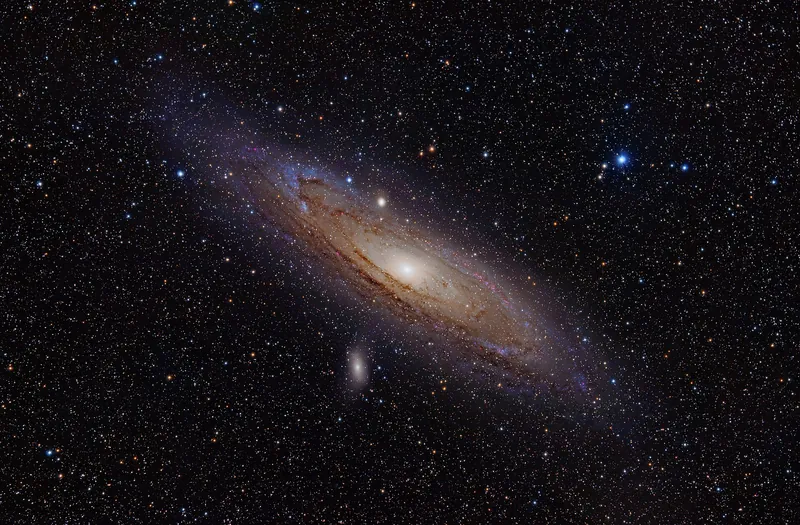
The short version
The Andromeda Galaxy, also called M31, is the nearest major galaxy to our own Milky Way. NASA, M31
It is a spiral galaxy in the constellation Andromeda. NASA, M31
It shares various characteristics with the Milky Way. Britannica
So the light we see left Andromeda 2.5 million years ago: we see it as it was then. EarthSky
Sources don’t always agree on the numbers, such as how far away it is or how wide. Where they differ, we show each figure side by side.
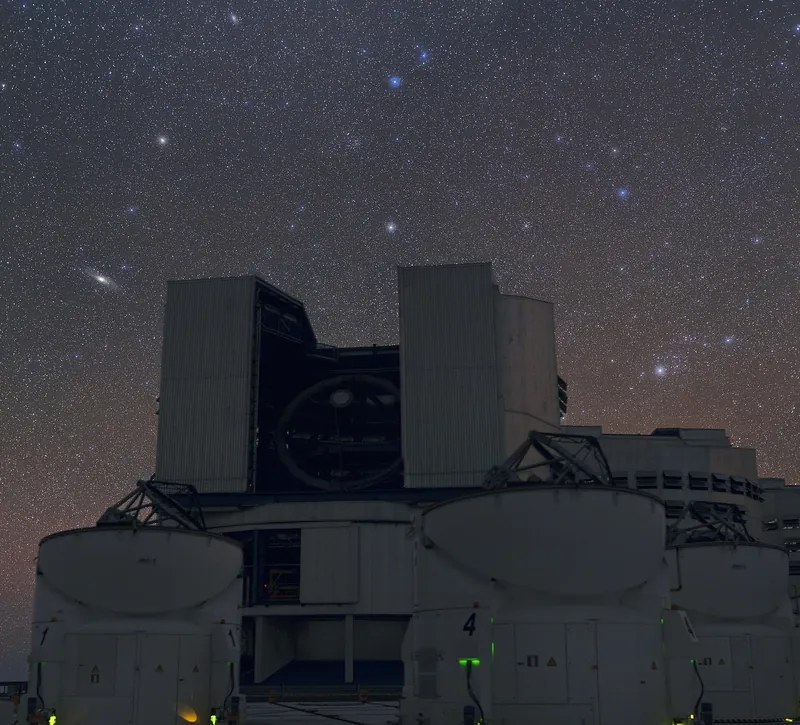
Explore
 The basicsOur nearest big neighbour.
 Hubble and VAR!The star that changed the universe.
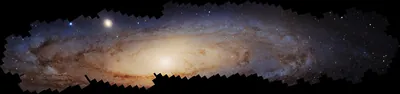 Inside Andromeda200 million stars in one picture.
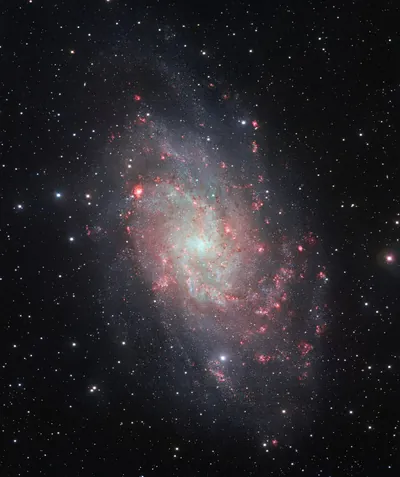 SatellitesA lopsided family, and a weirdo.
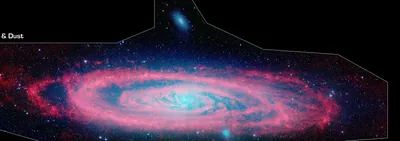 The coming meetingHead on, or a miss?
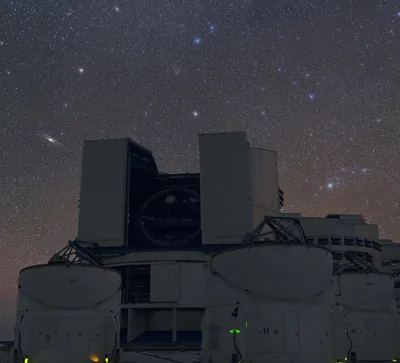 How to see itFollow the W of Cassiopeia.
Tile pictures are credited on their pages and on the credits page.
Try the games
A 12-question quiz, a myth-or-fact challenge, and an approach meter that counts how much closer Andromeda has come while you have been reading.
More from the family: our own galaxy has its own site, milky-way.galaxies.im, and the black holes, including the one at Andromeda’s heart, live at black-holes.galaxies.im.