Picture credits
The drawings are our own. The photos are from Wikimedia Commons, under Creative Commons licences (Attribution, or Attribution-ShareAlike), CC0, or in the public domain.
Photos
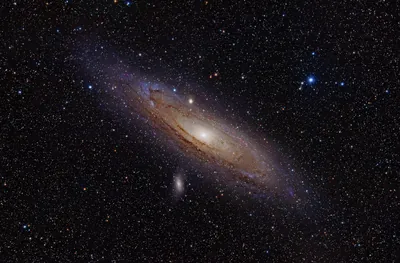
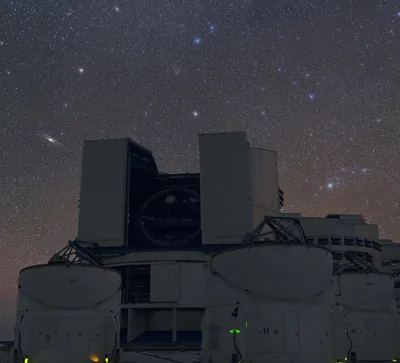 Над VLT – две галактики, видимые простым глазом.jpg
by ESO/B. Tafreshi, CC BY 4.0. Cropped and resized; no other changes.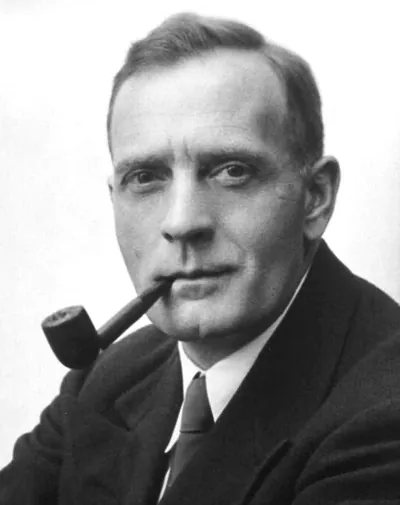 Studio portrait photograph of Edwin Powell Hubble (cropped).JPG
by Johan Hagemeyer, Public domain. Cropped and resized; no other changes.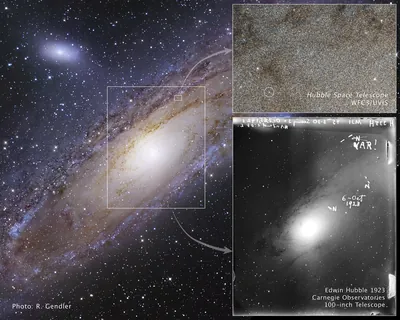 Snapshots of the star that changed the Universe (opo1115d).jpg
by NASA, ESA, Z. Levay and the Hubble Heritage Team (STScI/AURA), CC BY 4.0. Cropped and resized; no other changes.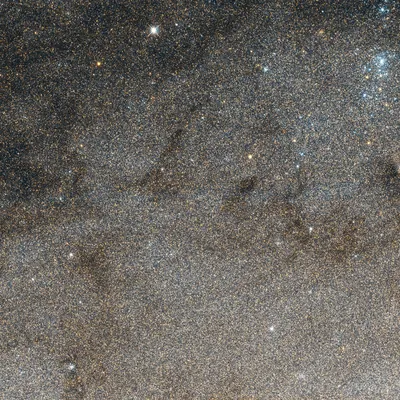 Hubble’s cepheid in the Andromeda Galaxy (ann1110a).jpg
by NASA, ESA and the Hubble Heritage Team (STScI/AURA), CC BY 4.0. Cropped and resized; no other changes.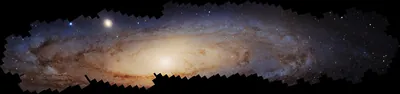 Hubble’s panoramic view of the Andromeda Galaxy (heic2501a).jpg
by NASA, ESA, B. Williams (University of Washington), CC BY 4.0. Cropped and resized; no other changes.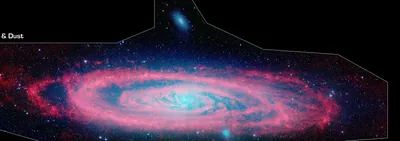 The Infrared Andromeda Galaxy (M31).jpg
by NASA/JPL-Caltech/P. Barmby (Harvard-Smithsonian CfA), Public domain. Cropped and resized; no other changes.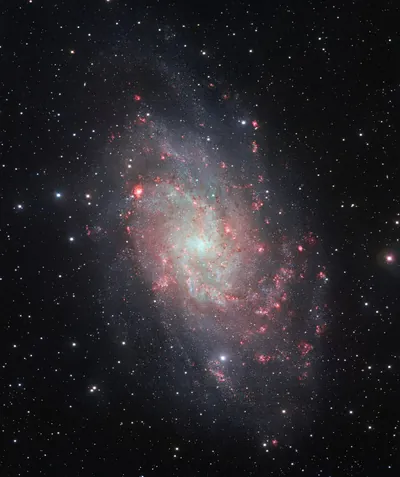 VST snaps a very detailed view of the Triangulum Galaxy.jpg
by ESO, CC BY 4.0. Cropped and resized; no other changes.
Our own drawings
- A to-scale drawing on a dark starry background: a small glowing oval on the left labelled Milky Way, 100,000 light-years across, and a larger oval on the right labelled Andromeda, 220,000 light-years across, joined by a dotted line labelled 2.5 million light-years. A short bar at the bottom shows 100,000 light-years.
Our own drawing - A drawing of the night sky: the W shape of Cassiopeia at top right, with a dotted arrow from its right-hand V down to a faint oval labelled Andromeda Galaxy, a faint hazy smudge. The Great Square of Pegasus is at bottom left, joined to the stars of the constellation Andromeda.
Our own drawing - A sketch of a dark photographic plate with three small marks labelled N, for nova. One N is crossed out and VAR! is written beside it. Notes say: one nova kept changing too fast; 5 to 6 October 1923; 45-minute exposure.
Our own drawing - A wavy line graph of a star’s brightness over time: it fades slowly, then rises sharply, again and again. One cycle is marked: a little over 31 days.
Our own drawing - A drawing of Andromeda’s centre: a black dot labelled black hole, 140 million Suns, inside a small disc of blue dots labelled disc of hot, young blue stars, inside a wider ring of red dots labelled ring of old red stars, about 5 light-years out.
Our own drawing - Two panels. Left, NASA 2012: two galaxies meeting head on in about 4 billion years. Right, new study 2025: two galaxies that may pass each other, with about a 50-50 chance of a collision within 10 billion years.
Our own drawing - A sketch of Andromeda in the middle with 36 small dots around it, most of them on one side, the side labelled towards the Milky Way.
Our own drawing - A bar chart of Andromeda’s width in light-years: Royal Observatory 152,000; Britannica 200,000; NASA 220,000.
Our own drawing - A bar chart of Andromeda’s distance in millions of light-years: Hubble in 1924, 0.9; Royal Observatory, 2; Britannica, 2.48; NASA, 2.5.
Our own drawing
The drawings are simplified teaching drawings, not to scale, made from the sourced descriptions on this site. Useless the eraser is the network’s own mascot. Fonts: Bricolage Grotesque, Newsreader and Kalam (SIL Open Font Licence), served from this site.